No months-long rollouts. Your team adopts Spigha in days, not months.
1
Guided onboarding
We onboard your vehicles, assets and users with a structured process, supported by our team.
2
No-code configuration
Alerts, business rules, routes and policies configured from the dashboard. Your team controls everything.
3
AI learns your operation
The AI module analyzes historical patterns and generates insights relevant to your business from day 1.
4
Measurable results
Executive dashboards with real-time savings, productivity and uptime KPIs.
All in one platform
13 integrated modules. One single subscription.
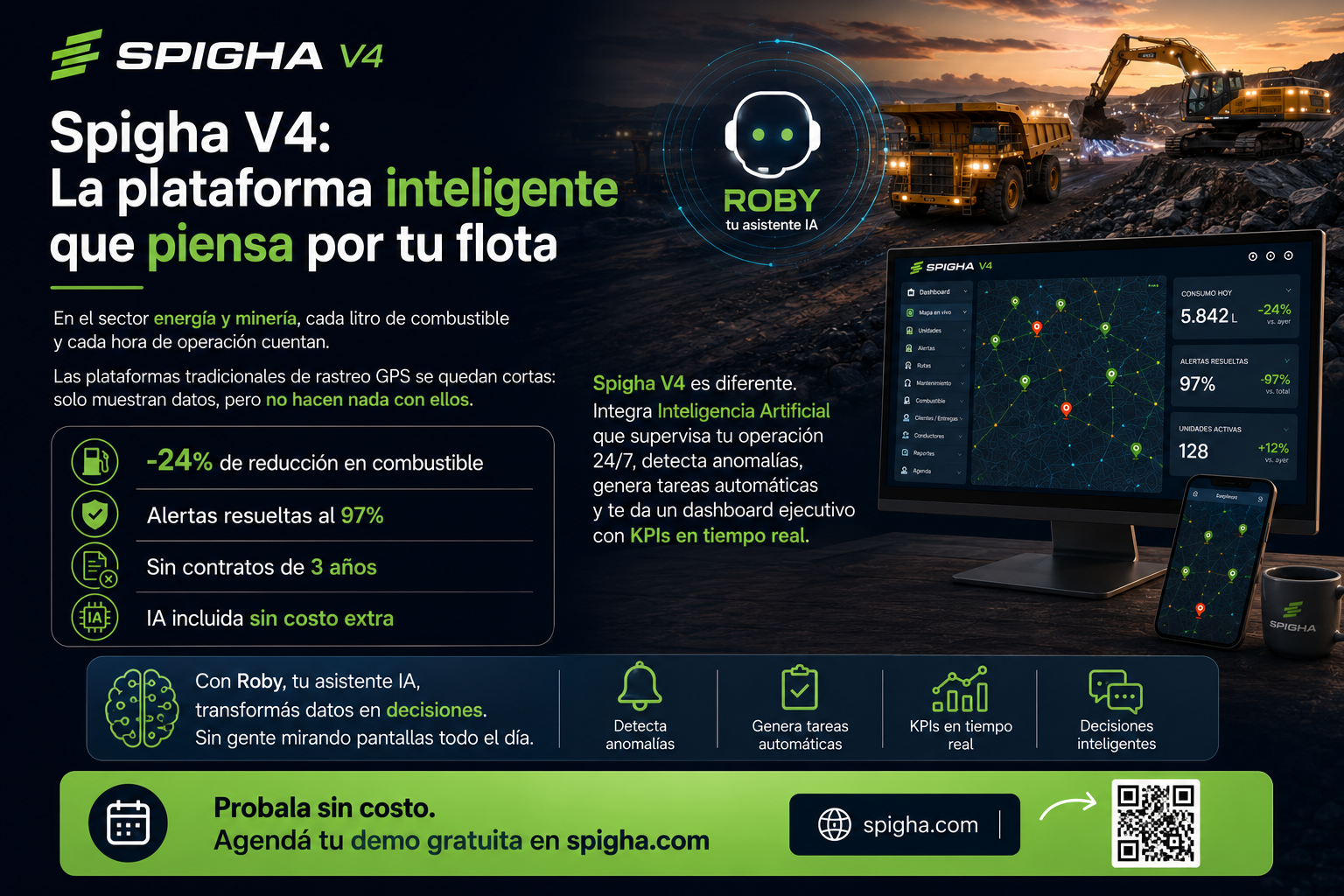
Modules connected to each other, with real-time data, accessible from any device, powered by Roby, the built-in AI that monitors your control processes and generates tasks automatically.
Real-Time Map & Monitoring
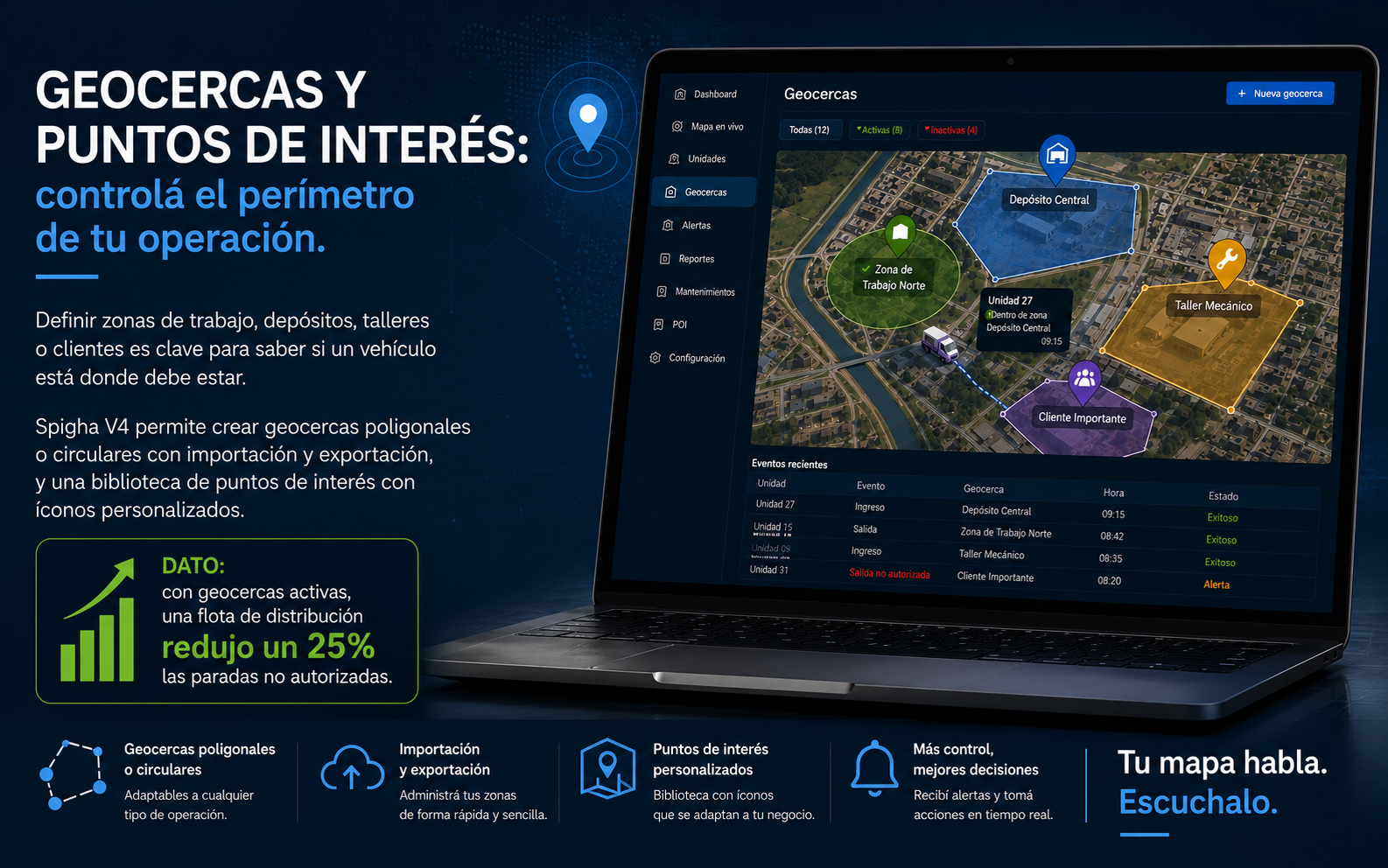
Live map (Leaflet) with free/OSM, satellite or Google Maps layers, 3D view and Street View. Online/offline status, moving or stopped, speed and engine state, route trail and event timeline. Address search and one-click geofence or point-of-interest creation right from the map, assisted by a natural-language AI assistant.
Real-time3D / Street ViewAI assistant
Reports & Dashboards
Trip report with route playback on the map and speeding detection. Per-unit performance reports — maintenance, fuel, mileage — and a fleet summary exportable to CSV or PDF, all from one centralized dashboard.
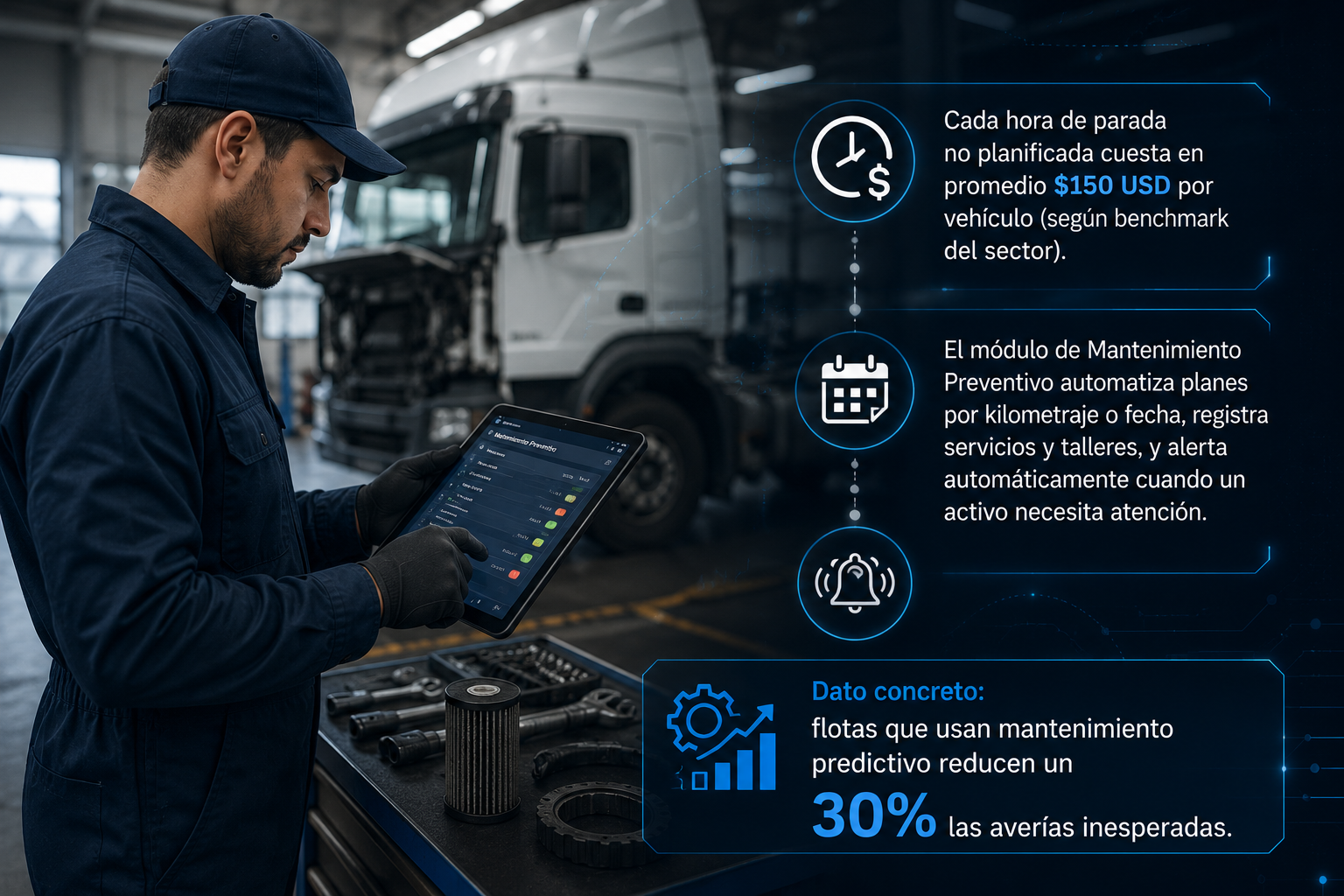
Preventive maintenance plans by mileage or date with due-date alerts, service and repair records (including unplanned ones), supplier and workshop management, and a complete history per unit.
PreventiveWorkshopsPer-unit history
Fuel Control
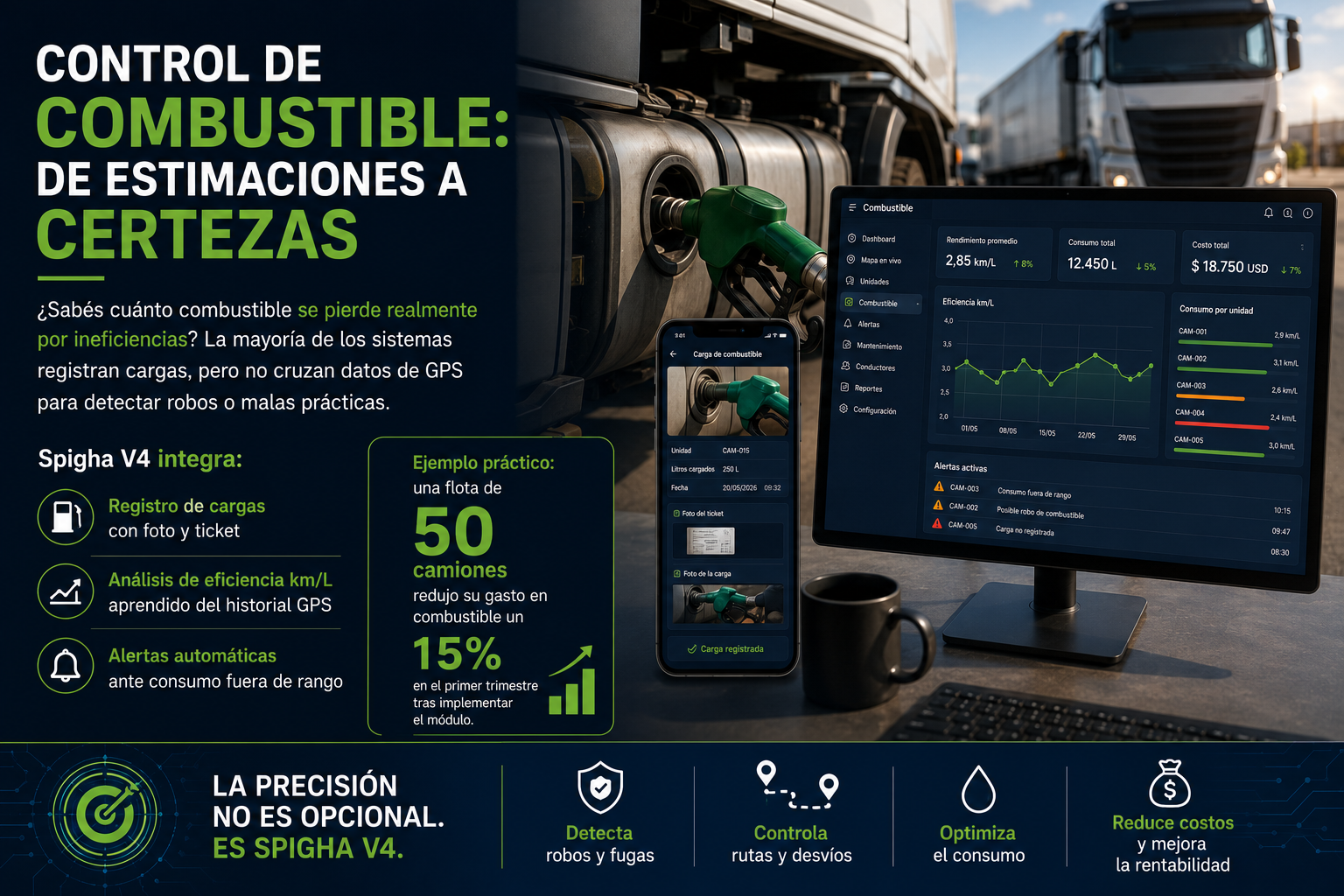
Log fuel fills with fuel type, quantity, price, receipt, mileage and a photo of the receipt. Supplier management and efficiency analysis (km/L) automatically learned from GPS history, not just the declared figure.
km/L efficiencyGPS-learnedSuppliers
Geofences & Points of Interest
Polygonal or circular geofences linked to units, with import and export, and a library of points of interest — depots, workshops, customers, offices — with their own icon and color, visible on maps and routes.
GeofencesPoints of interestImport/Export
Smart Alerts & Emergencies
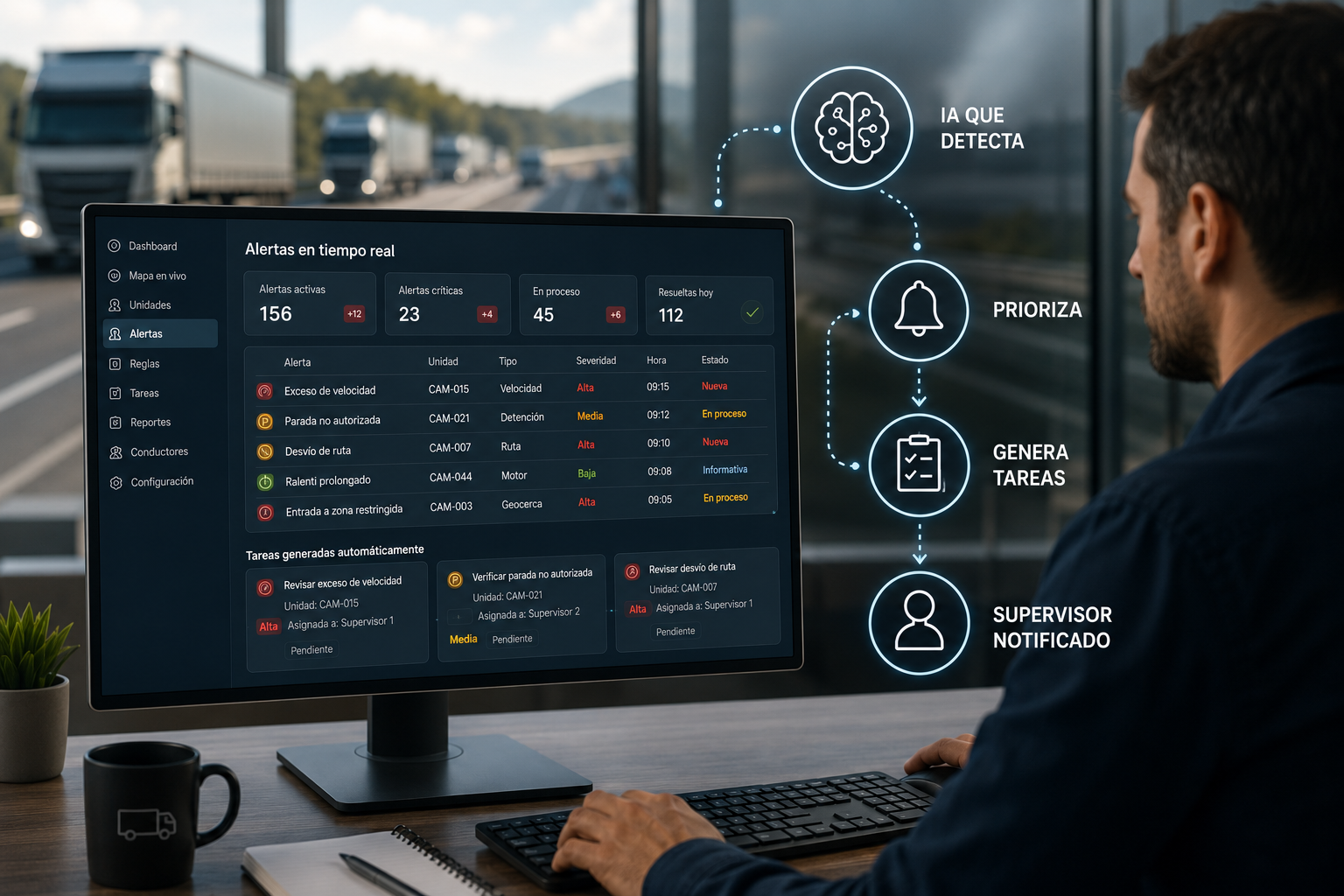
Custom rules for speeding, unauthorized stops, off-hours or out-of-radius, low battery, geofences, disconnection, idling, harsh braking/acceleration and panic. Active hours, severity and repeat (cooldown) control per rule, with a panic (SOS) button from the driver app and tracking through to resolution.
SOSMulti-channelCustom rules
Trip & Stop History
Full history of trips and stops by unit and date range, with mileage, real stop times and trip playback on the map. The base for auditing a regular route and spotting stops outside what's expected.
Trip historyStops by dateMileage
Customers, Visits & Deliveries
Add customers and points of interest linked to each one — depots, branches, dairy farms, job sites — visible on the map and on the route of any unit passing nearby. The system automatically detects by GPS when a unit arrived and how long it stayed, logging it into a visit-control report: confirmation that the delivery or pickup happened, with no call to the driver needed.
Customers & POIDelivery confirmationVisit report
Roby — Built-in AI Included
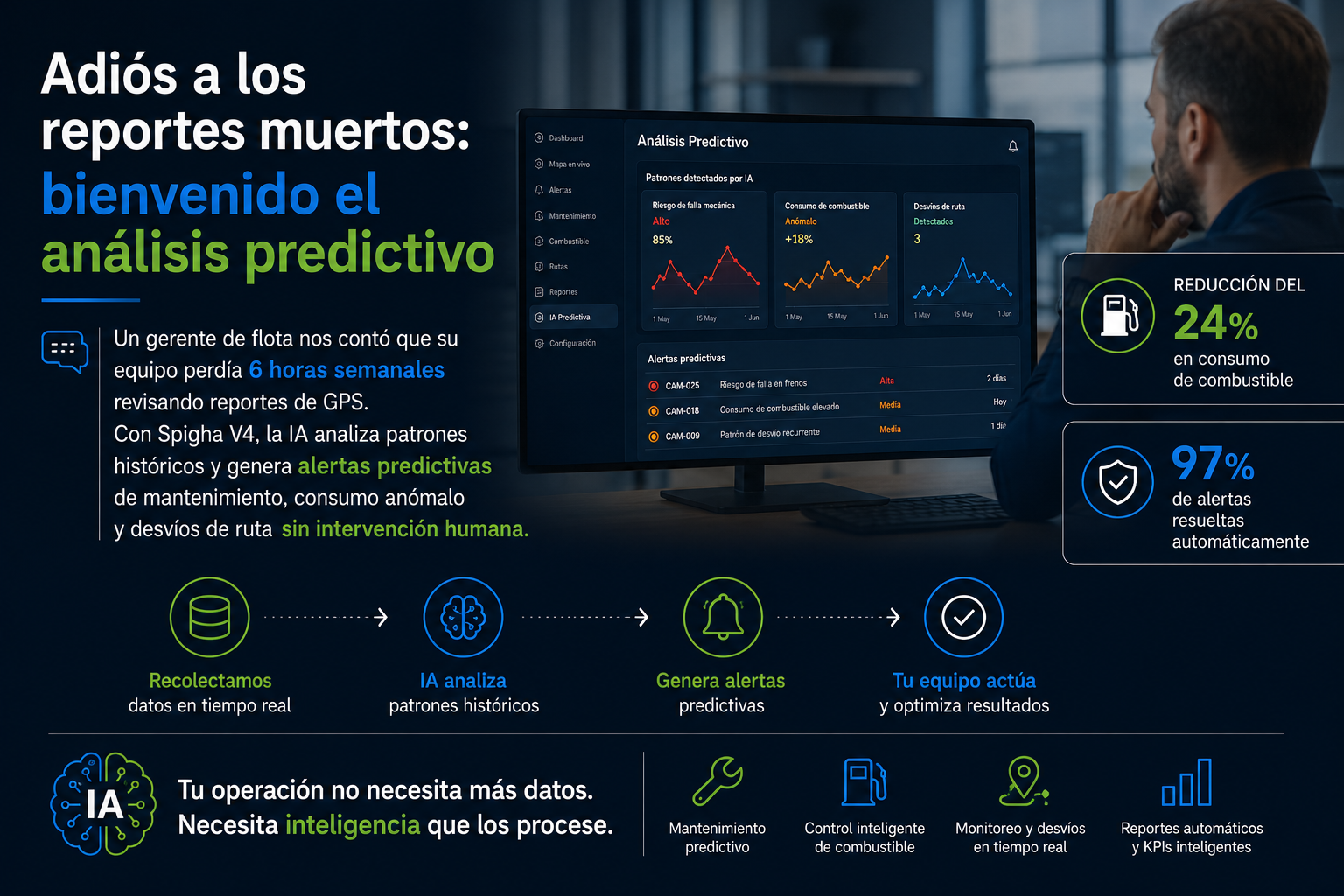
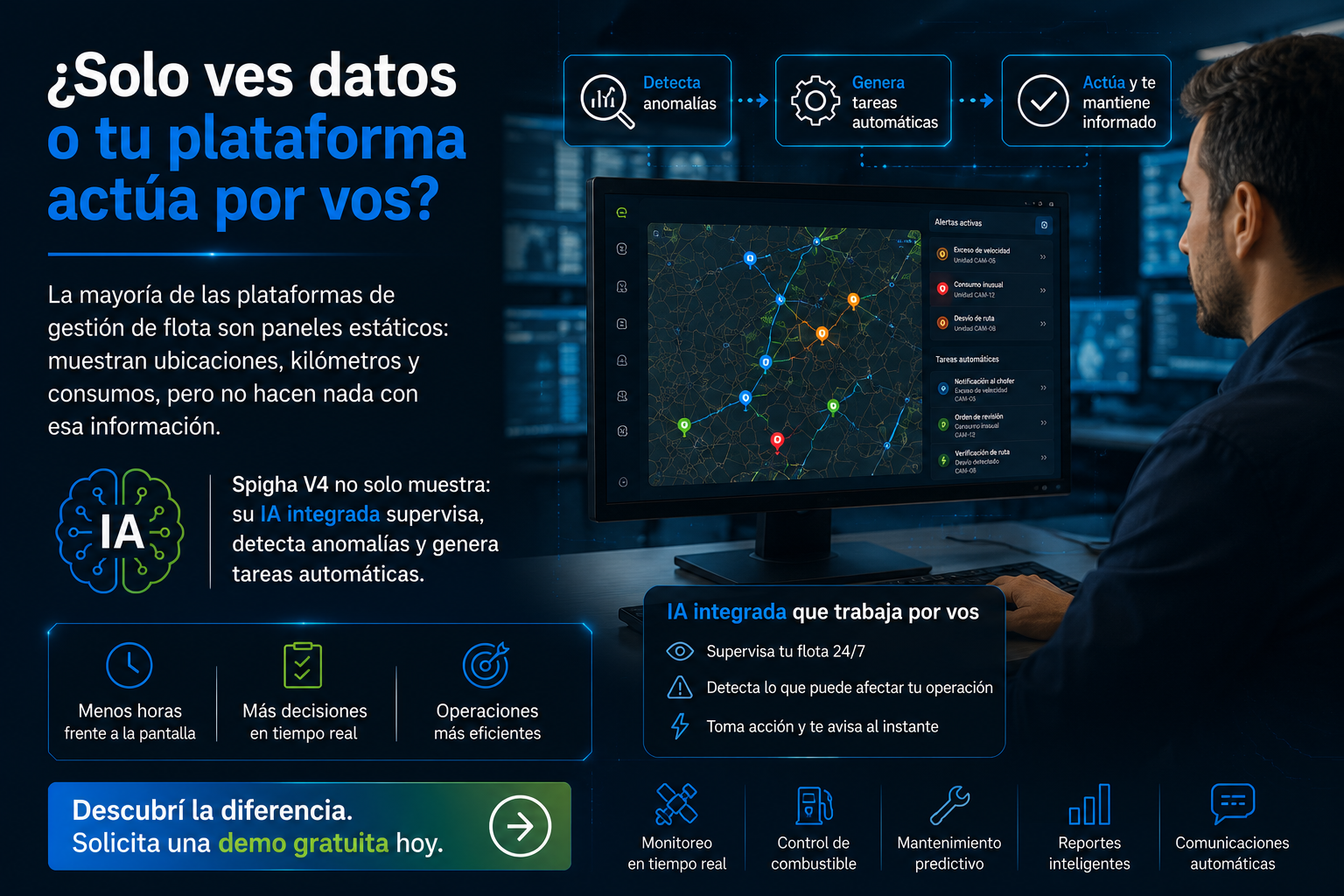
Roby knows your fleet status, your alerts and your business rules, and continuously monitors every control process: it detects inactive units, abnormal consumption, frequent speeding, overdue maintenance and skipped stops, and automatically creates the corrective task, with no one needing to ask. Plus a conversational AI assistant on the map, custom AI agents with their own triggers, and answers by text or voice.
Anomaly detectionCustom agentsText to speech
Units, Drivers & Users
Add, edit and remove units, drivers and company users, with roles and permissions by function. Send SMS commands to the GPS device, check GPS clock health at a glance, use an NFC keyring or backup QR code for password-free access, and generate and send credentials with one click.
NFC keyringRoles & permissionsSMS commands
Driver Mobile App
Your drivers log every fuel fill straight from their phone, with a photo of the ticket, mileage and amount — no paper forms, no photos lost in a chat. The data is available instantly on the fuel dashboard, ready to reconcile.
Driver appPhoto loggingNo paperwork
Onboard Cameras & Video
Live and on-demand video from the cameras installed on each unit, with individual access or a simultaneous view of the whole fleet from the same dashboard. Real visual evidence to review an event, a claim or the state of the cargo without being physically in the vehicle.
Live videoFleet viewVisual evidence
Industrial IoT Sensors
Monitoring of sensors connected to the unit or the cargo — temperature, door status, tank levels — with per-customer dashboards and automatic alerts when a value goes out of range. Active 24/7 monitoring, with an immediate notice if any sensor goes offline.
Temperature & tanks24/7 monitoringSensor alerts
Driver App
An app built for your drivers
Your drivers log every trip and report events in real time, straight from their phone, no paperwork required.
Fuel logging from the phone
Drivers log every fuel fill straight from their phone, with a photo of the ticket, mileage and amount — no paper forms.
NFC keyring identification
Each driver identifies on the unit with their NFC keyring or a backup QR code, no passwords to remember and no manual assignment sheets.
Visits detected automatically
On arrival at a customer or point of interest, the system detects it by GPS and logs it in the visit-control report, with no manual reporting from the driver.
Event reporting & panic button
Breakdowns, delays or incidents are reported instantly with a photo and notes, and the panic (SOS) button notifies dispatch immediately.
Customers, Visits & Deliveries
Confirm every delivery without calling the driver.
The customer module cross-checks your units' actual routes against the points of interest you loaded, automatically confirming visits and deliveries without relying on a driver's call or message.
Georeferenced customer
Every customer or point of interest — depot, branch, dairy farm, job site — is loaded on the map with its exact location, visible on the route of any unit passing nearby.
Automatic visit detection
The system cross-checks the unit's GPS route against the customer's location and automatically detects when it arrived and how long it stayed, with no reporting needed from the driver.
Visit-control report
A dedicated report shows, by customer and by date, every detected visit: which unit, which driver, arrival and departure time.
Full history per customer
Access the historical record for each customer or point: which units passed by, when, and how often, to audit compliance with regular visits.
Cross-check with speeding & stops
Combine visit control with speeding and stop reports for a complete read on how a delivery or collection route was actually run.
Export for audits
Export the visit report to CSV or PDF to account for a customer, a cooperative, or a regulatory body asking for proof of compliance.
Verticals
Built for critical industries
Drivers, maintenance, fuel, deliveries and communication with your team: the same underlying controls, adapted to the vocabulary and operational demands of each sector.
Transportation & Logistics
Track your own fleet and contracted carriers, identify each driver with their NFC keyring, schedule maintenance by mileage or date with automatic alerts, and confirm deliveries through GPS-detected arrival at each customer — no need to call the driver.
Use case: a general cargo carrier tracks its own trucks and its contracted carriers on the same map; each driver identifies with their NFC keyring at the start of the shift; the system automatically detects when a truck arrived at a customer and logs it in the visit-control report; the maintenance team gets an email alert as a unit's next service approaches; and for any incident, an SMS alert notifies the right person instantly.
Mining
Heavy fleet control in remote areas, operator identification via NFC keyring, per-unit equipment usage hours to plan the next service, and automatic alerts if a unit leaves the authorized operating area.
Use case: a mining company tracks its trucks and heavy equipment in areas without steady signal, identifies which operator is on each machine via NFC keyring, checks each machine's usage hours to schedule the next service, gets notified if a unit leaves the approved perimeter, and alerts the shift supervisor by SMS for any critical alert.
Oil & Gas
Track tanker trucks between plants, terminals and service stations, identify each driver, control the fuel loaded on each unit, and automatically confirm delivery on arrival at destination.
Use case: a fuel distributor tracks its tanker trucks in real time, identifies each driver via NFC keyring, cross-checks each trip against the logged loads, automatically detects when a truck arrived at a station — logging the delivery with no phone calls — and schedules maintenance for the whole fleet from the same dashboard.
Cold Chain
Cold Storage & Temperature Control
Real-time temperature monitoring with IoT sensors on each unit, automatic alerts if temperature goes out of range, harsh braking/acceleration control to reduce stress on what's being transported — meat, live cattle or sensitive cargo — delivery confirmation through GPS-detected arrival at each customer, and a full history for sanitary audits.
Use case: a cold-storage company tracks the temperature of every delivery truck in real time, gets an email or SMS alert the moment the cold chain breaks, monitors each driver's harsh braking and acceleration to protect cargo quality and reduce transport stress, automatically confirms when each truck arrived at a customer with no phone call needed, and has the historical log ready to show at an inspection.
Municipalities & Government
Control of collection fleets, urban services and emergency vehicles, driver and operator identification, scheduled maintenance for the whole fleet, and exportable usage reports for accountability.
Use case: a municipality tracks its collection trucks and urban service vehicles, identifies which driver is on each unit, automatically checks which neighborhoods each truck covered, schedules maintenance for the whole fleet, and exports monthly usage reports for its oversight office.
Construction
Track heavy machinery and vehicles across job sites, identify operators via NFC keyring, schedule preventive maintenance by usage hours or date, and get automatic email or SMS alerts for any fleet alert.
Use case: a construction company running several active sites knows exactly which site each machine is at right now, who is operating it, how many hours it has been working, when its next service is due, and gets an automatic alert if a machine stays stopped longer than expected.
Agriculture & Cooperatives
Track rural fleets and harvest equipment, identify drivers, control fuel logged in the field, schedule fleet maintenance, and confirm visits to fixed points like dairy farms, collection centers or silos.
Use case: a dairy company tracks both its daily milk collection route and its long-haul delivery trips. Each dairy farm is loaded as a point of interest on the map, and when the truck arrives, the system automatically logs the entry and the time on site — confirming the pickup with no phone call needed. The company controls its own fleet and its contracted carriers from the same dashboard, identifies each driver via NFC keyring, reviews speeding events on the rural route, schedules fleet maintenance, gets email or SMS alerts for any incident, and audits visits to farms and customers with a single exportable report.
Why Spigha?
What global platforms don't give you
Spigha was built from scratch for demanding LATAM operations. Things Samsara, Geotab or Verizon Connect don't include — or charge extra for.
Multilingual, dedicated support
Available in English, Spanish and Portuguese, with human support in your team’s language. No bots, no anonymous tickets.
Built-in AI at no extra cost
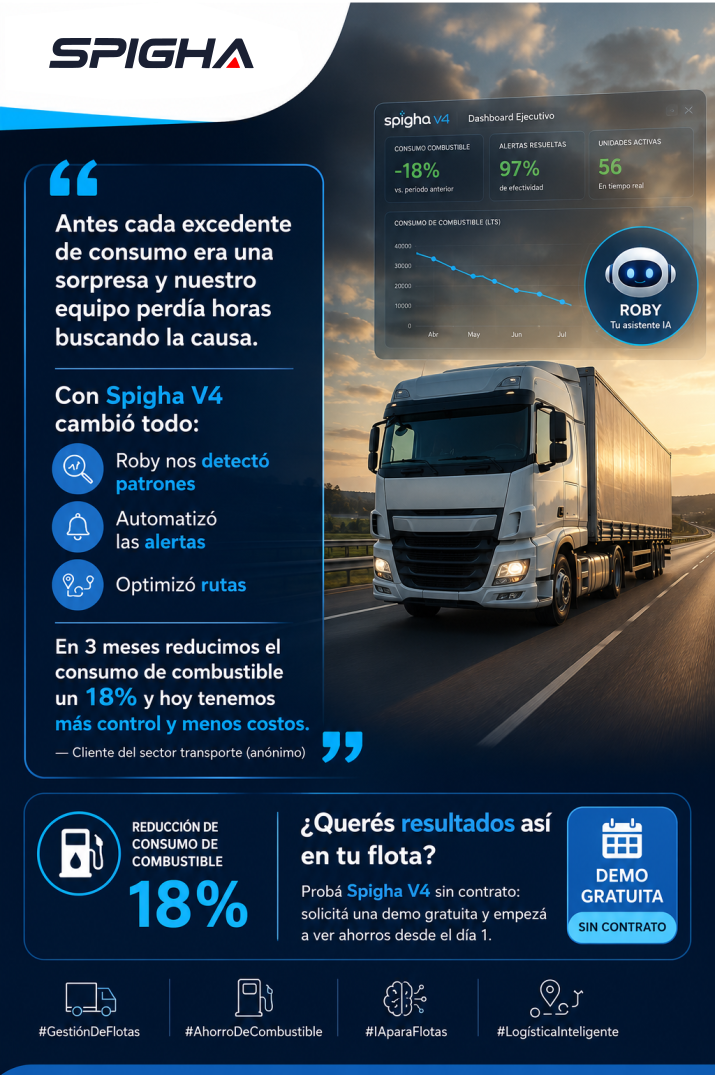
2,000 AI credits per month included in both plans. No billing surprises. AI is part of the product, not an add-on: Roby monitors every control process — fuel, maintenance, driving, geofences — and when it detects an anomaly it automatically creates the corrective task, with no manual intervention.
No 3-year contracts
Monthly plan with no minimum commitment or penalties. Or choose the annual plan and save 20%. You decide how to commit to the platform.
Implementation in days, not months
Guided onboarding, no external consultants. Your operation goes live in 1 to 5 business days from contract signing.
Deliveries confirmed with no phone call
Most platforms just show you where the vehicle is. Spigha automatically detects by GPS when a unit arrived at a customer and logs it in a visit-control report, with no phone call and no manual reporting from the driver.
Cameras and IoT sensors, at no extra cost
Onboard video and industrial sensor monitoring (temperature, tanks, doors) are included within the same subscription, along with tracking equipment on free loan. No separate bill for video or IoT at the end of the month, as with other platforms.
Transparent pricing
One flat price, no vehicle limit
The bigger your fleet, the more Spigha pays off versus per-vehicle solutions. No hidden costs or separate modules.
Monthly billing · no minimum commitment · no equipment
No equipment included: use your own hardware or buy it separately.
Compatible with standard 4G/3G GPS trackers capable of GPS + GLONASS, backup battery and an SOS panic button, purchased separately. Remote fuel/engine cut-off available as an option, at an additional cost.
AI included: 2,000 credits/month at no extra charge. Overage at $0.80/credit.
Tracking equipment included: GPS + GLONASS, 4G/LTE connectivity, backup battery and SOS panic button. Remote fuel/engine cut-off available as an option, at an additional cost.
AI included: 2,000 credits/month at no extra charge. Overage at $0.80/credit.
Tracking equipment included: GPS + GLONASS, 4G/LTE connectivity, backup battery and SOS panic button. Remote fuel/engine cut-off available as an option, at an additional cost.